5 Common Mistakes to Avoid While Using a Megger
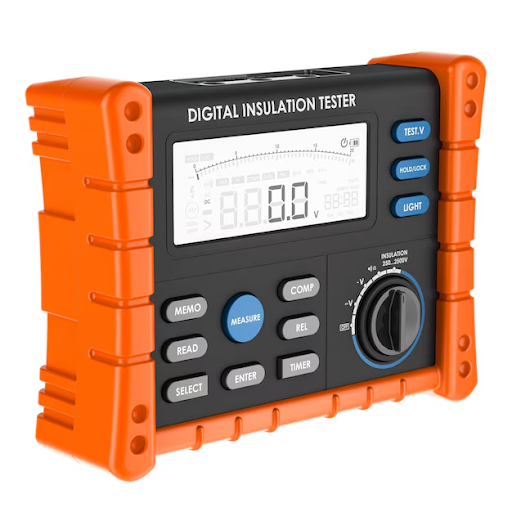
Operating an insulation tester megger is a standard but vital aspect of maintaining electrical safety in industrial, commercial, and even residential settings. These testers are integral in verifying the integrity of the insulation within cables, motors, and other electrical devices. But though the job they are designed to do is uncomplicated, errors while testing can contribute to false readings, damage to equipment, or worse, pose safety risks.
In this blog, we’ll explore five common mistakes people make while using a megger and how to avoid them.
1. Testing Live Circuits
Among the most common and hazardous errors in using an insulation tester megger is using it on a live circuit. A megger is made to pass a high DC voltage (usually 500V to 5kV or more) through the equipment to be tested in order to measure resistance. Conducting this test on a live circuit can lead to shock from electricity, damage to equipment, or an explosion.
How to Avoid It:
Always verify that the circuit is fully de-energized prior to testing. Check using a multimeter that there is no voltage. Lockout/tagout (LOTO) protocols must be used so that equipment will not be accidentally energized during the test.
2. Omitting Equipment Discharge
Before and after applying a megger, discharge the test equipment. The high voltage created by the test might impart a residual charge to the component, which is unsafe.
How to Avoid It:
After finishing the insulation resistance test, utilize the built-in discharge function of the megger (if present) or discharge the equipment manually with an insulated grounding rod. No dangerous voltage will be present in the system.
3. Misinterpreting the Results
Misreading the results shown by the insulation tester megger is another frequent error. In this case, users are not familiar with the acceptable levels of resistance for various equipment, and hence incorrect conclusions are made—either trusting that all is well when it is not, or unnecessarily replacing equipment.
How to Avoid It:
Always use manufacturer specifications or international standards (e.g., IEEE or IEC) to read insulation resistance values correctly. A general guideline is that an insulation resistance of at least 1 MΩ per 1,000 operating volts is acceptable, but this can depend on the application.
4. Using the Wrong Test Voltage
Every electrical component or apparatus has an ideal test voltage range. A voltage too low may not stress the insulation sufficiently to uncover defects. Alternatively, a voltage too high can actually damage the insulation, particularly in low-voltage equipment.
How to Avoid It
Choose the right test voltage for the equipment. 500V is mostly for low-voltage systems, 1kV for motors and medium-voltage systems, and more for high-voltage cables. Refer to the equipment manual or contact technical support from the manufacturer of the insulation tester in case of uncertainty.
5. Disregarding Environmental Conditions
Insulation resistance varies with temperature and humidity. Testing in very humid or very cold conditions can provide inaccurate results. Moisture has a dramatic effect on lowering insulation resistance, and very low temperatures could give the impression of falsely high readings because of low conductivity.
How to Avoid It:
Measure ambient temperature and humidity levels during the test, and if required, adjust the readings using standard correction factors. It’s also advisable to test under repeatable conditions when comparing results over time in order to detect insulation degradation.
Conclusion
Avoidance of these most prevalent errors will render your application of an insulation tester megger safer and more efficient. Adequate training, safety procedures, and knowing the correct way to read test results will make insulation resistance testing a useful tool in your electrical maintenance system.
For industries in search of reliable and precise insulation test solutions, Udeyraj Electricals Private Limited is a trusted company to rely on. With years of experience and dedication to quality, Udeyraj offers reliable testing equipment that ensures electrical safety and efficiency in various industries.