
What Is High Voltage Equipment? Key Types and Their Industrial Applications
Ever asked yourself what energizes big industrial plants, substations, and utility grids to operate efficiently and safely? The key is high voltage equipment, a vital element of today’s power systems that processes and regulates high-voltage electricity, usually over 1,000 volts AC or 1,500 volts DC. The equipment is not only vital for transmitting power but also for guaranteeing electrical infrastructure safety, reliability, and efficiency.
In this blog, we’ll explore what high voltage equipment is, the key types used across industries, and their major applications in the real world.
Understanding High Voltage Equipment
High voltage equipment is a general term used for devices and systems that are made for working with high voltages. These devices are designed to make it possible for electricity to be transmitted or distributed over long distances with low losses, while avoiding breakdowns and electrical mishaps. Their designs involve better insulation, better materials, and strong safety features.
In utilities and industries, the equipment serves to test, measure, switch, isolate, and protect electrical circuits with high voltage.
Most Important Types of High Voltage Equipment
High Voltage Testers
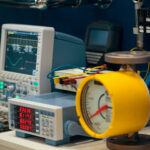
High voltage testers are irreplaceable in the detection of insulation malfunction, breakdown, or irregularities in electrical systems. They are employed in ensuring that equipment is capable of withstanding operating voltages without malfunctioning. They are mostly utilized at commissioning, in regular maintenance, and during fault analysis.
High Voltage Insulation Testers
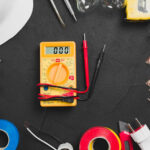
They are utilized to test the condition of insulation within cables, transformers, motors, and switchgear. Proper insulation testing is responsible for the safety and longevity of the whole electrical system. These testers typically utilize a high-resistance meter in order to measure insulation resistance and leakage currents.
High Voltage Circuit Breakers
Purpose-built to cut off fault currents and shield electrical circuits from destruction, circuit breakers are an integral component of every high voltage installation. They operate automatically upon the occurrence of abnormal voltage currents or faults to provide a guarantee of operational safety.
High Voltage Transformers
These are utilized for stepping up or stepping down the voltages in a power transmission system. High voltage transformers have a crucial role in reducing power loss during long-distance transmission of electricity.
Surge Arresters
Surge arresters shield high-voltage devices against transient voltage spikes, e.g., during lightning strikes or switching. They support stable voltage and safeguard attached systems against damage.
Disconnect Switches (Isolators)
Utilized to disconnect sections of a circuit physically for maintenance or emergency shut-down, they are essential to secure the safety of workers handling high-voltage systems.
Industrial Uses of High Voltage Equipment
Power Generation and Distribution
High voltage equipment is heavily utilized within power generation facilities and substations to manage, protect, and monitor the movement of electricity. Transformers and circuit breakers ensure an efficient energy supply to remote geographical locations.
Manufacturing Plants
Heavy machinery and automated process industries need stable high-voltage systems. High voltage testers and insulation testers prevent unexpected downtime by actively discovering likely faults.
Utility and Grid Infrastructure
Power grids around the world are dependent on high voltage equipment to deliver power over long distances. Disconnect switches and surge arresters are some of the important devices that help ensure the stability and safety of these grid systems.
Railways and Metro Systems
Electric trams and metro trains utilize high voltage for traction. High voltage equipment provides smooth and consistent operation while protecting against system faults or voltage surges.
Oil & Gas and Petrochemical Plants
These industries run in risky environments where voltage reliability is not a negotiable aspect. High voltage insulation testing and condition monitoring provide operational safety and regulatory compliance norms.
Renewable Energy Systems
Wind farms and solar parks tend to function on high-voltage levels in order to interface with the national grid. High voltage transformers and protective devices are necessary for extracting and transmitting clean power efficiently.
Key Factors for Selecting High Voltage Equipment
When choosing high voltage equipment that is appropriate, engineers have to take into account:
- Working voltage and current range
- Environmental conditions (i.e., humidity, temperature)
- Safety compliance standards and certifications
- Reliability and maintenance needs
- Compatibility with installed systems
Additionally, features such as portability, digital readout, automatic discharge, and backup power using batteries can contribute to the value of test and measurement instruments.
Conclusion
The contribution of high voltage equipment in industry today cannot be overemphasized. It is the backbone of industrial operations and energy transmission through the provision of safety, reliability, and efficiency in operations. For businesses that need strong, precise, and reliable high-voltage testing products, Udeyraj Electricals Private Limited has a comprehensive range of products designed with excellence.
With over three decades of experience designing utility power test and measuring equipment, they remain a credible name in high-voltage testing for various industries.